


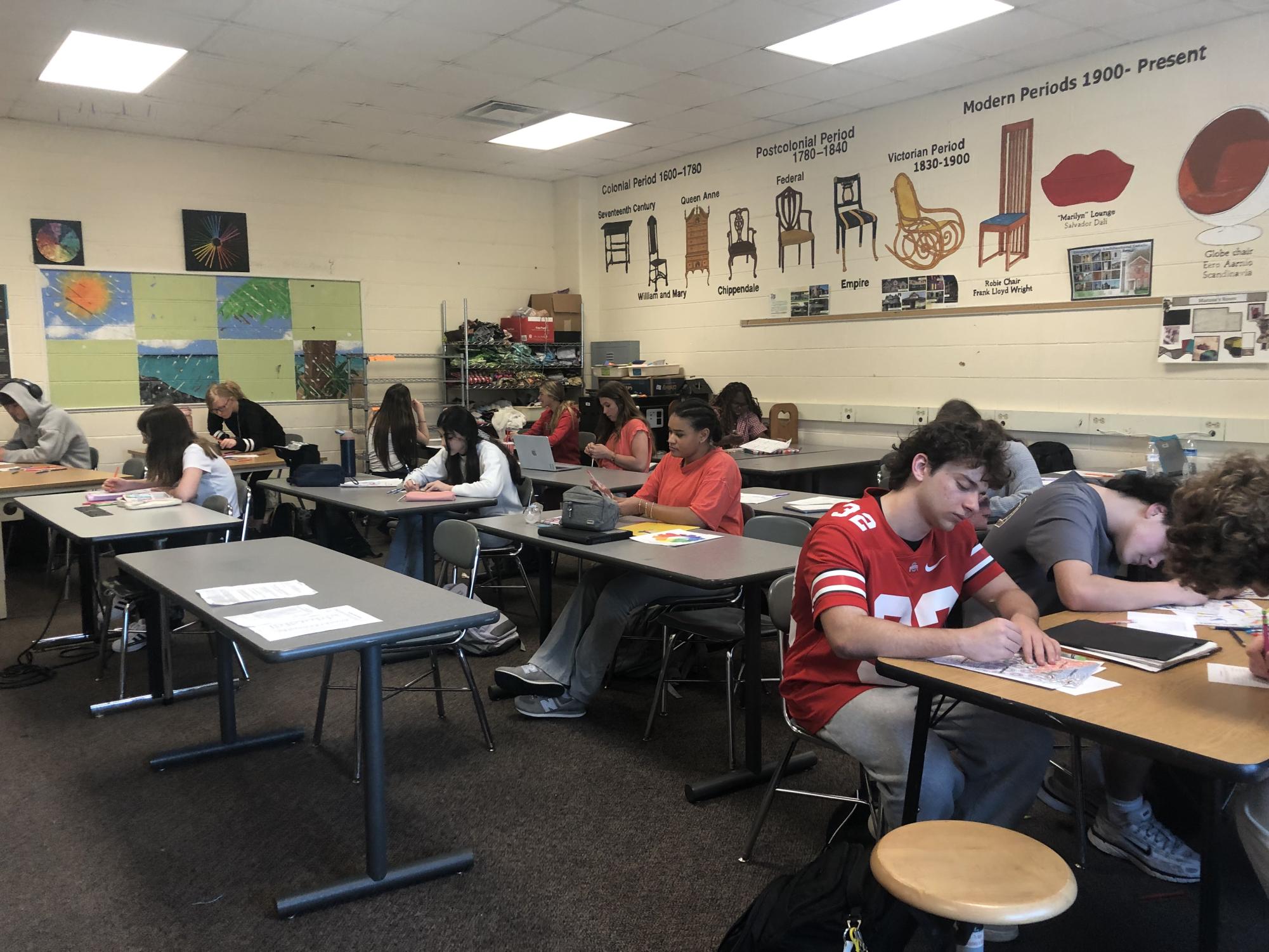
Nearly midway through the second semester, Wakefield students enrolled in interior design classes taught by Jane Flanagan are mastering skills beyond typical high school coursework. In a modern economy that demands innovative infrastructure and functional spaces, these hands-on classes that immerse students in the key mechanics of design are as relevant as ever. More importantly, they offer a unique space for students to express their bold visions, while also helping them develop an eye to critique the architecture they see every day.
Interior design classes have risen in popularity, fitting seamlessly alongside some of Wakefield’s other traditional art electives. Junior interior design student Makayla Coley elaborates on some of the coursework that helps students step into the shoes of working professionals.
“[Right now] we’re working on the design process. We’re interviewing other people in the class and pretending that we’re interior designers,” Coley said. “We have options [when it comes to] what we would like to put in a room. Yesterday we made a mood board. That was fun because I love making mood boards.”
The educators heading these programs are passionate about their curricula. One challenging aspect of their positions is that they must strike a fine balance between preparing students for the rules and client expectations of the real world, while also actively facilitating their creativity. Wakefield interior design teacher Jane Flanagan describes her love for watching her students’ artistic confidence grow over time.
“You’re more creative than you realize,” Flanagan said. “I watch them [develop] from the beginning of the semester to the end, and it’s a neat thing to see [them] develop a sense of how to do something with the creative part of their brain.”
For students with big aspirations, the advanced studio interior design class offers a clear path forward. This rigorous course requires them to finish several extensive projects, helping them to develop their portfolio while effectively utilizing their technical skills. Senior and future interior designer Alayna Roof explains how she brought her dream house to life for one of these projects by blending personal tastes with functional design elements.
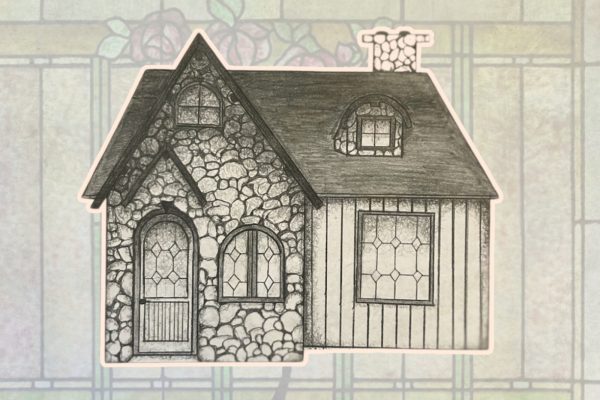
dream home. Stained glass was made the focal point of the design.
“It would definitely be a bohemian cottage-styled home, and there would be stained glass everywhere. Everything would be tiled. The floor, the ceiling, the walls, everything. The whole kitchen area had built-in benches. There was more of a breakfast nook than an actual dining room. I wanted it to be comfy and cozy and obviously still functional,” Alayna said. “I brought back some of the early 2000s and showed off my personality. Stained glass was a huge, huge thing. I had a lot of fun picking that out. There were a lot of neat little things in there.”
Whether students are actively pursuing interior design as a career or simply taking the class as an elective, the classes remain highly applicable. These classes teach students not only how to express themselves, but also how to mesh their artistic visions with the strict rules of real-world industries. Senior interior design student Tayce Todd elaborates on what makes interior design classes relevant and valuable in a variety of post-graduate paths.
“Design is used everywhere — in schools, houses, apartments [and] other buildings,” Todd said. “It’s really important to have some kind of background [in design], even if you plan on going into something like contracting or construction. We also learn about more than just interior design, as we learn about making floor plans and measurements as well. There’s a lot that goes into it.”


